Innopath is data investigation for curious, lateral, and different thinkers. Students work a realistic mystery with messy data and no answer key. Along the way they build critical thinking and reasoning and AI literacy, and get a first taste of the problems real careers solve. Built for classrooms and programs.
Real learning happens when ideas collide across domains, not when one is hammered alone.
Lateral by design.
Modular, non-linear, built for brains that wander with purpose. The detour is the discovery.
Built for how you actually think.
Tools that work the way real minds work, not the way curriculums assume they do.
For classrooms and programs
How it works in a classroom.
Each case is a realistic mystery built on messy data. Students read the evidence, work the data, commit to a theory, and test it. A case runs in a couple of class sessions and adapts to your students and your tools. We figure out the fit together.
Our cases change: an outbreak, a shooting streak, a wave of failed logins. The way Data Detectives think through them doesn't. Every case runs on one method, so the skills carry from case to case, and out of the classroom.
Critical thinking and reasoning
Work the data as it really is: messy, incomplete, sometimes contradictory. Decide what it can and can't tell you, then make a call and back it up.
AI literacy
When a tool can do the calculating, the human job is asking the right question and checking the answer. Data Detectives practice both, on paper and in spreadsheets first.
Career exploration
Each case borrows a problem from a real line of work. Students weigh evidence, make a decision, and brief someone who has to act on it.
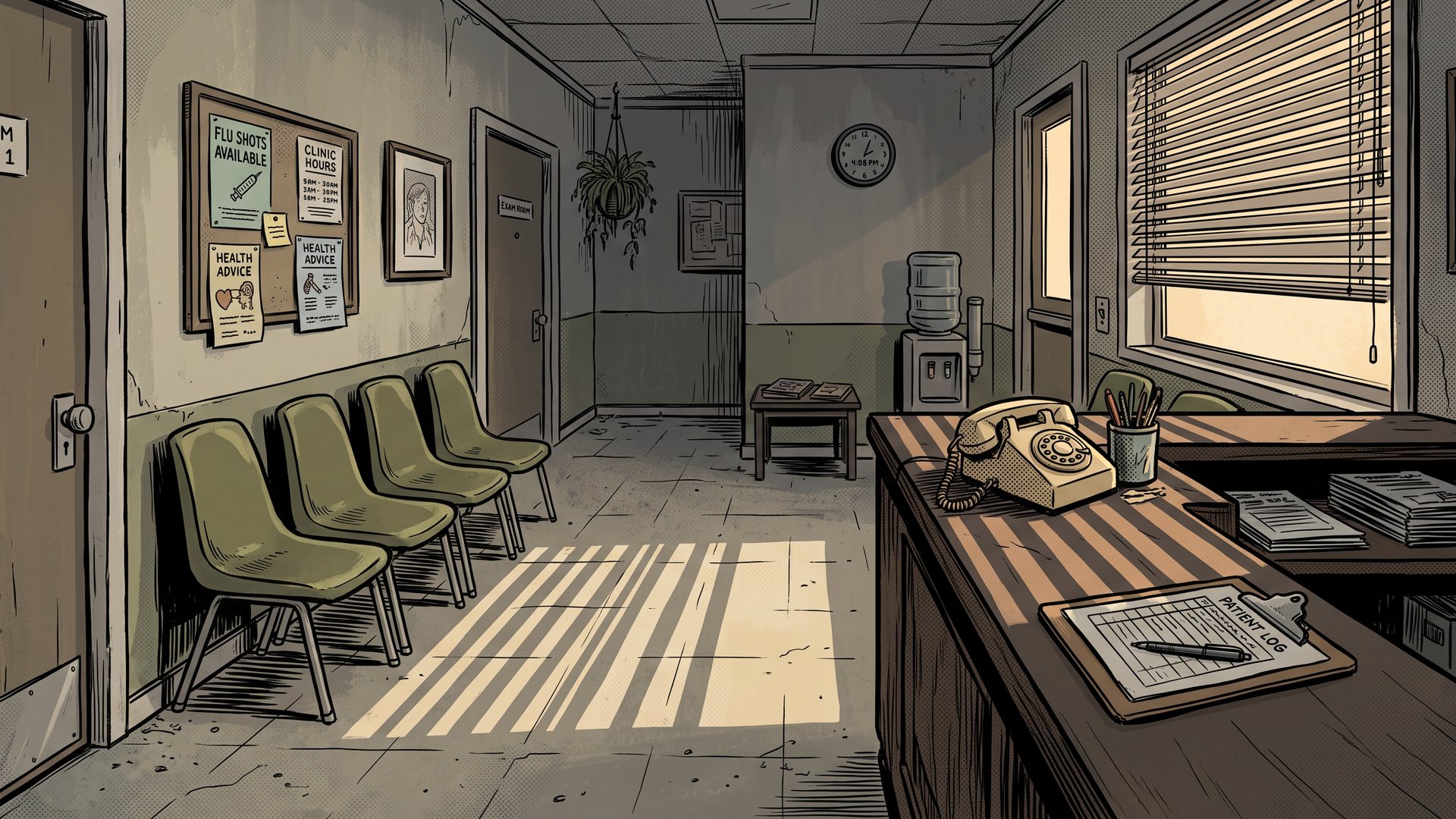
Eighteen kids and a handful of adults turned up at a small-town clinic with stomach cramps and fever inside a single weekend. Where do you look first?
"Follow the evidence. Make a call, then test it."
CONFIDENTIAL
LocationHolloway Creek, pop. ~4,200
DateTuesday, July 16
Cases18 children · several adults
SourceHolloway Creek Family Clinic
"Something's going around." So what's the move?
Most patients are campers at Camp Greenleaf, the summer day camp at Riverside Park, but a few of the sick have no connection to the camp at all. Symptom onset is staggered across Friday morning to Monday afternoon. The county lab won't come back with samples for days. Theories on the community Facebook page are already escalating: the ice cream shop, the pool, the camp lunch, the lake. Your move.
→ Pick one investigation move.
Preview · The Gazette, page A1
Tuesday's front page.
Students read the full article in the first session.
What you practice here: signal-finding, reading a story for what's in the margins, not just the headline.
What would you underline?
Preview · The camp check-in log
30 campers. Typos, gaps, and duplicates included.
camper_id
age
home_address
date_of_first_symptoms
got_sick
notes
C002
9
87 Maple Ave
July 13 2024
Yes
(blank)
C006
12
55 Birch Ln
7/14/24
No
(blank)
C008
9
408 Elm
(blank)
(blank)
possible duplicate of C007
C009
11
1840 Hillcrest Dr
(blank)
No
(blank)
4 of 30 rows · some columns hidden
What you practice here: cleaning messy data, and deciding what it can and can't tell you yet.
What would you fix first?
Preview · The field interviews
Five questions, every family.
Students write their own interview questions before they hear a single answer, then use the same questions with every household.
What you practice here: descriptive epidemiology, looking for patterns across person, place, and time.
What would you ask first?
This is the opening of the case. The rest unfolds in the classroom.
Want to run it with your students? Let's talk →
One method. Many kinds of problems.
Each case stands alone and takes on a different kind of problem. Pick the one that fits your class.
Built for the kinds of brains that don't sit still.
/ 01 · The Teacher
The educator who is tired of tools that punish lateral thinking.
Looking for sessions that reward connection-making, not just correct recall.
/ 02 · The Learner
The student who finishes the worksheet, and then asks why.
Curious past the answer key. Loves a puzzle that doesn't have a single right answer.
/ 03 · The Parent
The grown-up of a kid who learns differently, and wants more than busywork.
Wants tools that meet their kid where they actually are, not where the curriculum assumes they are. Start with a free worksheet →
For educators
Bring a case to your class.
Teaching math, statistics, data science, or science? Running an after-school or enrichment program? Tell us a little about your class and we'll set up a time to talk about whether a case fits, and how.
1Tell us a little about your class
2We talk it through: your students, your tools, your schedule
3We fit a case to your room
Good to know
No student accounts and no student data. This form is for the teacher or program lead.
Got it. Thank you.
We'll reach out within a few days to set up a time to talk.